
In Between Stimuli and Response...
The Path to Breaking Patterns and Transforming One's Life As Seen Through an IFS Lens

I’ve been thinking a lot about this topic since returning home from the jungle. I discussed it at length in my previous post but I felt a dedicated post was warranted. Here, I’ll be applying an Internal Family Systems lens to the question at hand, which is: how do we interrupt old patterns and make real change in our lives?
Let’s break it down:
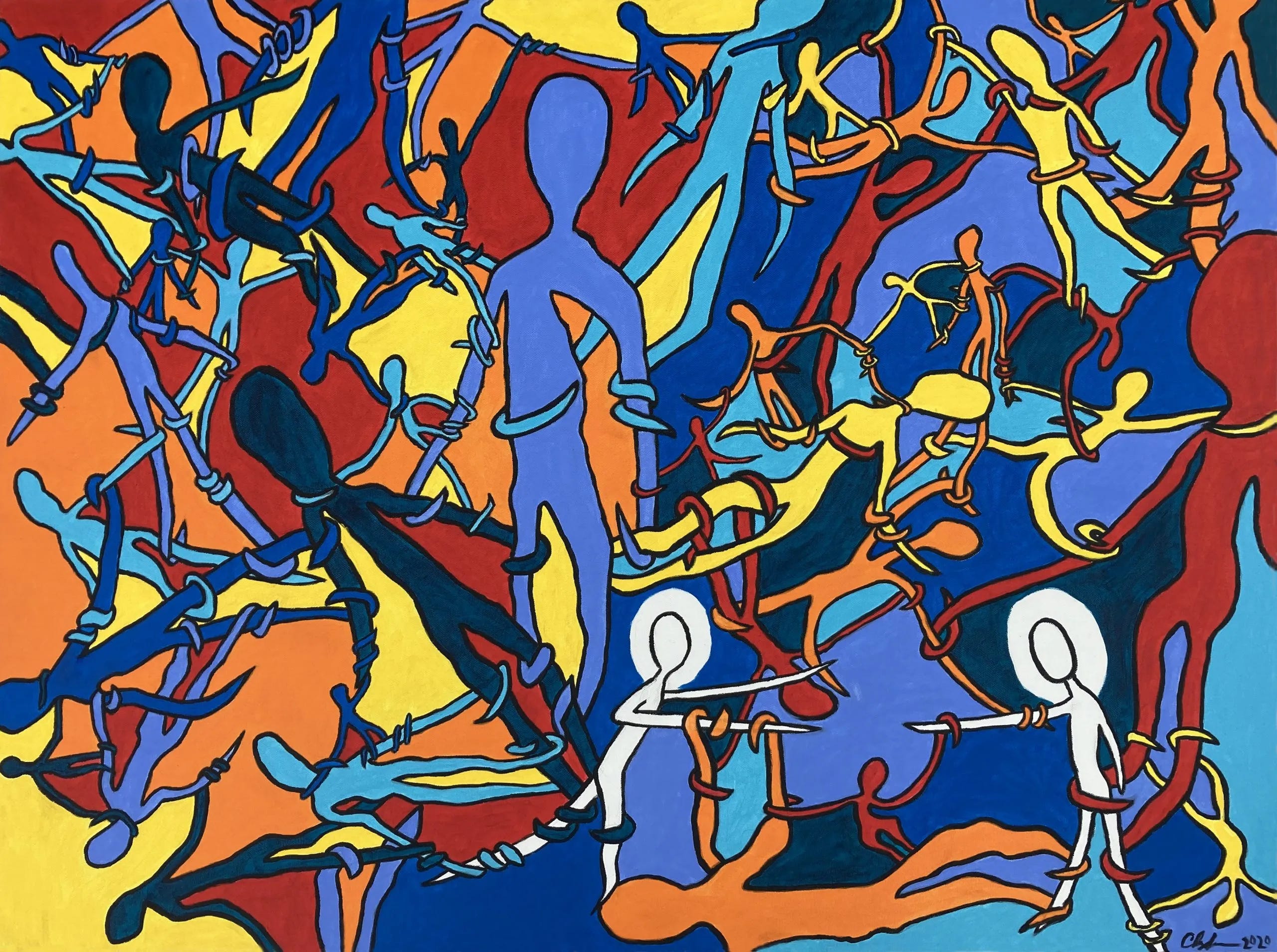
Patterns are maladaptive coping strategies developed in childhood and adolescence to navigate challenging familial and social situations. They often involve an amalgam of complex, contradictory impulses. These contradictions arise as a result of conflicting parts of our personality vying for control and protection of the overall internal system. Each of these parts has a story, a specific role, and a set of beliefs that govern its impulses.
Now, the parts in and of themselves are not a problem—they are, after all, children who learned at a young age certain behavioral patterns to stay safe. Only, as adults these patterns do not protect us. They do not foster safety; they merely strengthen the underlying belief in which they’re rooted:
The belief in the illusion of separation. They keep us separate, disconnected, confused, conflicted.
These parts see themselves as separate and distinct. They exist in a dream state. And most of us have not developed the skills to step out of the dream state. So we remain trapped there, afraid, unknowingly caught in the whirlwind of our patterns and thoughts.
Most of our lives we identify deeply with these parts. We believe their stories. We believe we are them. We act on their impulses. And by acting on their impulses, we become slaves to these protective patterns. We become depressed, angry, sad, self-depricating, self-protecting, lonely. We become caught in cycles of suffering. Now, depression, anger, sadness, fear—these are not bad feelings we need to avoid. We are not trying to get rid of them. We are not striving towards enlightenment. Enlightenment is the true nature of being—it is right here waiting for us to awaken from the dream.
The goal is not to kill the ego, or suppress these parts. That effort is just another part, perhaps the sneakiest one of all, trying to control things, trying to become what it is not, what it cannot be.
The goal is presence. Mindfulness—as I said in my previous post. When we find ourselves acting from fear—making decisions based on our constricted impulses—we are merely recreating the conditions of the wounds inside of us. More importantly, we’re caught up in the dream state—the old patterns, the old stories. So we must cultivate our awareness. Be as mindful of our thoughts and feelings, our minds and bodies, as possible. This way we begin to make contact with our patterns.
On our own, these patterns manifest as fears—maybe of scarcity, of being alone, of getting sick—as well as self-critical voices, addictions, irritability, among many other things.
In relationships, this manifests in various ways: choosing partners who are emotionally clingy, or emotionally unavailable, or abusive, or controlling, etc.—as a way to unconsciously recycle and reaffirm the original wound: either the fear of abandonment, the fear of engulfment, the fear of being hurt, or the myriad other fears that plague us and our relationships. Whatever the fear is, it was born from early childhood experiences in which we did not receive proper love, attention, and care.
And so, caught in these old, old stories, we repeat them. We play them out over and over and over, expecting a different result.
Unless…
Unless we begin to operate from a more conscious place.
For those of us with insecure attachment styles—that’s approximately 40 percent of the population, though I imagine it’s much higher honestly—we often operate from one of two places—running and chasing. Or we vacillate between the two. Running is the act of retreating for the sake of self protection. Chasing is the act of reaching out for the sake of regulation. Both are self-soothing strategies. Both are born from a fear of love—or rather a misunderstanding of it based on early childhood wounding. But the underlying need—the need for true connection and safety—is never actually met.
It’s not until we begin to see these parts clearly that we can interrupt their patterns and make different decisions.
That’s why relationships are often such a powerful site of potential transformation. In relationships, our patterns emerge. Usually, when we’re identified with them, we blame our partner, or our friends, our family. We don’t take deeper responsibility for what’s arising. Hence why therapy can be so beneficial—given the right therapist. Because a safe relationship offers the conditions in which to bring patterns to the surface to be seen, felt, and healed. A safe relationship is one in which both individuals are consciously, lovingly working together, encouraging one another to cultivate a deeper sense of Self. Compassion, love, patience—these are hallmarks of a safe relationship. After all, true love does not shine a light on who you think you are; it shines a light on who you really are, shadows and all. It touches the places inside us we are not ready to see, but which we must observe if we want to grow, to become whole, to step into a greater sense of authenticity and power.
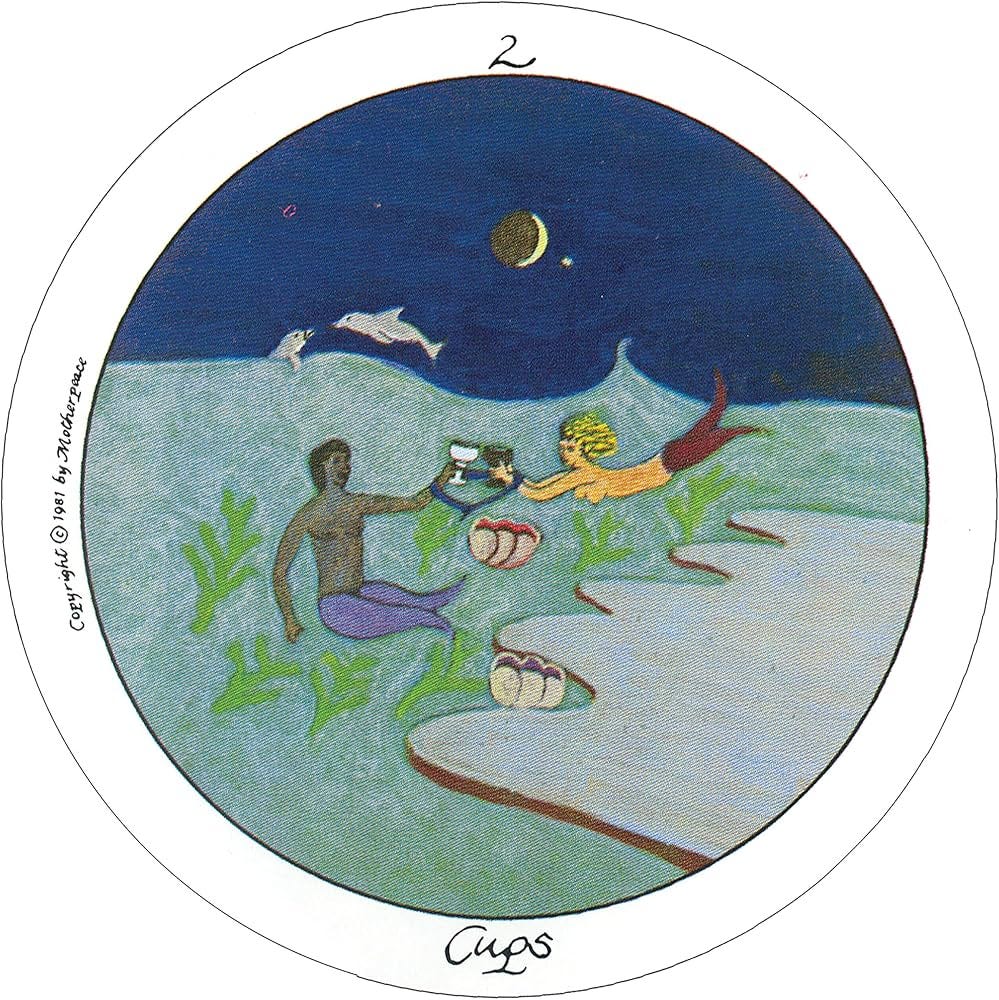
Without these relationships, we’re often unable to break the patterns at all, let alone notice them. Relationships act as mirrors. They show us to ourselves if we are willing to see clearly, to inquire within when our shadows are made apparent. And I’m not saying, we should stay in unhealthy or toxic dynamics, or stick out relationships that lock us into old patterns. Quite the opposite. I’m saying, if the container is right, and there is sufficient love and mutual desire to grow and hold ourselves and each other to compassionate account, then there’s a very real possibility to transform old patterns and thus step into true internal and interpersonal freedom, and build relationships from a much stronger, healthier foundation. But that can be done alone, too. If we are willing to take sufficient time to sit with ourselves, with those parts of ourselves we’re uncomfortable with, those parts we can’t see clearly—eventually the truth does reveal itself and that’s when the opportunity to break free arises.
So, what does that freedom look like?
In between stimuli and response, there is space. In the beginning that space is momentary, minute. For that brief moment, we are free. Then it passes; we fall back into the dream. We let the impulses and fears swallow us rather than letting them pass without acting on them. The latter way of doing things is mindfulness. And mindfulness is a muscle. Like exercising, we can strengthen it, build the space wider and wider and wider—until we’re able to recognize rather quickly when we’re blended with our parts, their patterns and stories—and when we need to take a step back, breathe, and root ourselves in a higher state of consciousness—our natural state, the state of Selfhood.
What is this natural state? It’s pure presence. The loving witness consciousness. I’ve named it before in previous posts. In IFS terms, there’s eight C’s that characterize this state—clarity, confidence, curiosity, creativity, compassion, calm, courage, and connectedness.
How do we distinguish between parts and Self? It’s a matter of spaciousness. All thought forms arise from our parts; the complexion and texture of these sensations in the body is often tight, sticky, heavy, hot; the thoughts, ruminatory, panicky, urgent. We might feel a tightness in our chest, a lump in our throat, a pit in our stomach. The Self—the witness consciousness—on the other hand, runs on stillness—wide, spacious, calm stillness. It’s a deeply felt sense of relaxation and inner calm and inner wholeness. Often in that stillness, a soft, clear voice begins to speak: the voice of our intuition. It is the intuition which speaks the highest truth of our lives. It is the intuition that knows the way forward—that discerns right action from wrong action. Right action arises organically. It flows without effort. Wrong action feels forced. It reinforces the heaviness from which it arises. So the more we cultivate Selfhood, the louder this intuitive voice becomes—and the more capable we are of discerning it from our parts.
For example, for me I find that writing comes from two places: the place of my parts, and the place of Self. When my parts are writing, it feels forced, difficult, slow, like trudging through sludge. From this place, a critical voice questions every word. I often end up deleting these bits because, frankly, they’re not very good. Or maybe they are good, but the parts have so little trust that they can’t really tell either way. Not to tell my parts they’re not good at writing. The problem is that, when burdened by their old beliefs and maladaptive patterns, they leave no room for play, for creativity, for flow—the place where true expression comes from. Thus, it is necessary for me to be deeply conscious when I’m writing—to observe my body and ask myself which parts are activated. If I can gain enough space to see them clearly, they’ll often tell me what they’re feeling—what they’re thinking—what they need in order to feel better. The answer, most of the time, is love, presence, trust, reassurance. When I tap into that place, the stuck emotions—the ones the parts try to guard—begin to move, and that’s when I can write something truly great. That’s when the channel opens and truth pours through.
So it’s really about honesty. About being deeply present with ourselves and gently, compassionately identifying what’s happening inside of us. When we do that, we come out of hiding. We relinquish control. We begin to set ourselves free. We stop moving from a place of self-protection, and start moving from a place of sincere authenticity. The more we anchor ourselves in this space, the more we access our true power—a quiet generative power that fills us up. From this place, we begin to act differently, to choose differently, to move through the world from a more embodied, inhabited and aligned place, while the patterns crash and recede inside us like the tides.
Breaking old patterns doesn’t happen by avoiding or bypassing them. That’s just another pattern trying to maintain control. We break old patterns by rooting in Self, in presence and making direct, honest contact with every part of ourselves.
That contact begins a long, slow, irrevocable transformation. And we stop believing we are those parts. We stop buying what they’re selling. We stop listening to the self-admonishment, the impulses to run and chase. We start seeing these thoughts and feelings as signals to come back to ourselves, to listen to our needs. That’s the meaning of being Self-led. We see through the parts, their patterns, and from Self we make different choices. And the more we transform, the less identified we are with our thoughts, our beliefs, our patterns.
The more we transform, the more we begin to see we are not separate from anyone or anything else. We are not separate from our partners, our enemies, the objects of our desire and the objects of our disdain. And if we’re not separate, then how do we navigate the world? How do we navigate relationships?
Those are questions you’ll have to ask yourself. For me, it means making a conscious effort to listen more; to love cleaner; it means more compassion, more patience, more stillness. It means allowing judgements to rise and fall; allowing partners, friends, family to make their own mistakes, their own decisions. It means less control and more trust, more flow. And as always it means, simply, remembering.
So that’s my spiel. I hope some of you get something out of this.
And if you want more in-depth understanding of Internal Family Systems, you should read No Bad Parts by Richard Schwartz (forgive the amazon link). I feel like IFS is the most coherent map of the psyche I’ve encountered on my own journey of self-inquiry and transformation. Highly recommend for anyone trying to break old patterns and create real change within themselves and in their relationships.
Anyways, thanks again for reading. And please consider a paid subscription. It’s only $5 a month. And the support helps me keep doing this work, and ideally, build the momentum to make it a viable source of income in the long term.
I hope everyone has a wonderful holiday. Stay warm. And be kind to yourself. We all deserve to give ourselves some grace.
All my love,
Zoey
P.S.
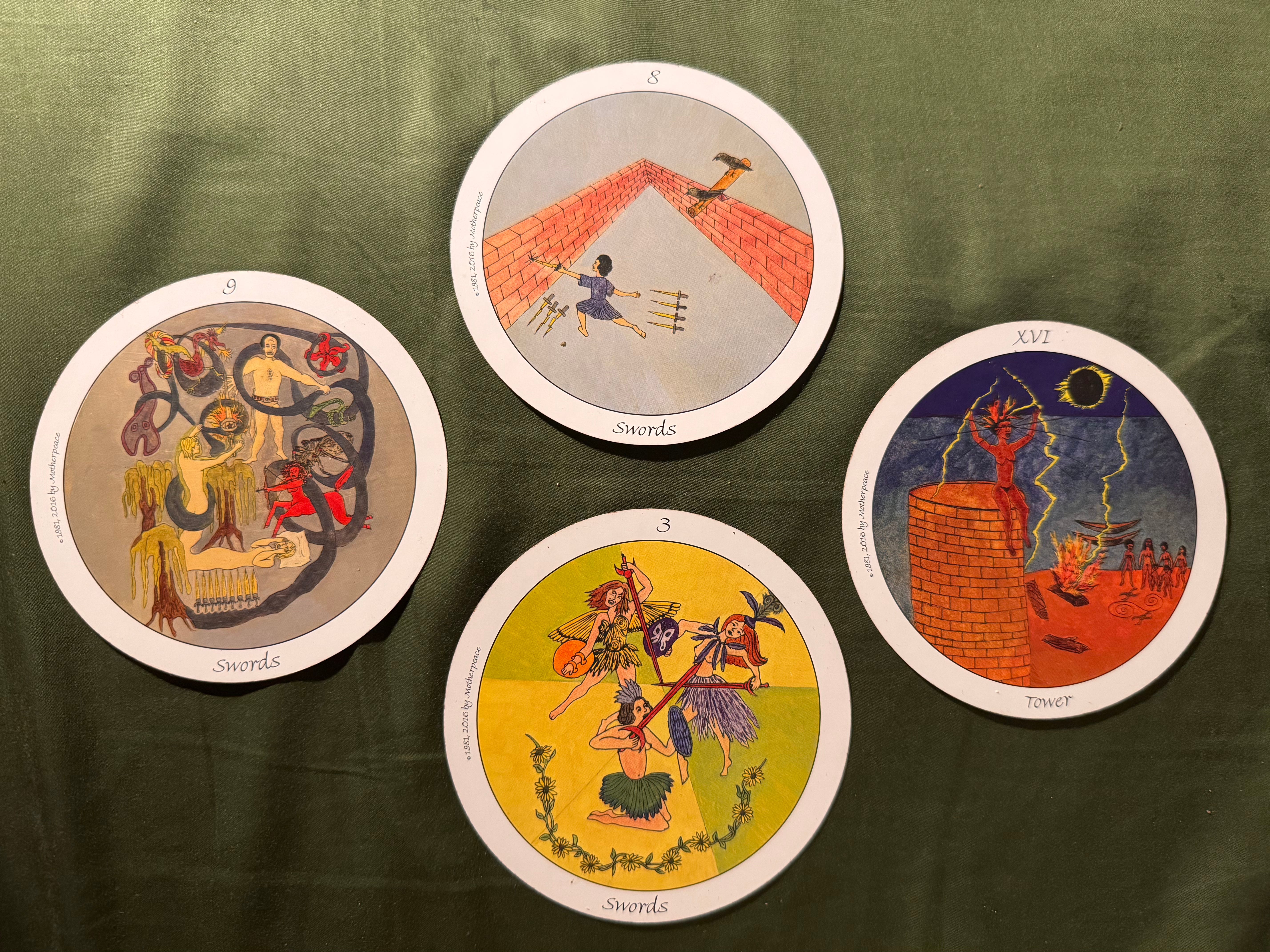
I want to name something that’s come up for me in the hours after publishing this piece. I’m back in Kansas City, staying at my grandparent’s apartment while they’re out of town, because I’ve come down with a little chest cold and I don’t want to get anyone sick. So I’m here alone. And I’m without the usual distractions—no video games, no television. Just silence. Just being with myself. So I decided to consult my tarot cards tonight. I asked them, what’s coming up for me? What’s being transformed? What in my shadow wants to be seen? And the answer has jarred something loose in me.
What’s come loose is this: I am afraid of the unknown. All my life, I staved off that fear with meaning making, interpretation, figuring it out. Emotions were too big to hold so I resorted to my mind for answers. And there I remained, imprisoned by it—stuck in it (trapped like the 8 of swords—which funny enough came up in this reading).
In the past, so much of who I thought I was was built around being right, insightful, special, attuned. Knowing gave me validation. It gave me a reason to speak, to take up space, to be seen, to be rewarded. But that identity is falling away and what’s arising is fear, grief, sadness.
A question arises: Who am I without “knowing”?
I don’t know…
Not knowing gives rise to fear, to feelings of deficiency, of being less than, being on shaky ground. If I don’t have it all figured out, if I don’t have it all together, will I be loved? Will I be chosen? Will I be held and seen?
This is a part talking, clearly. So for now, I must simply sit with its grief. I must sit here while this old identity falls away.
And then I suppose the real question becomes: who am I when this identity falls away?
And the truth is, I don’t know yet. Perhaps I ought to take my own advice and sit with my body, with my grief without needing to figure it out or solve it or be on top of it. Maybe I can just be in it. In the big inarticulable emotions. In the question without answer. And allow the truth to reveal itself in its own sweet time.
In the mean time, I’ll stay here with my practices, my writing, my meditation, stillness. And allow life to unfold as it will.
I suppose that’s the nature of surrender. That’s the nature of learning to trust the unknown instead of fearing it.